

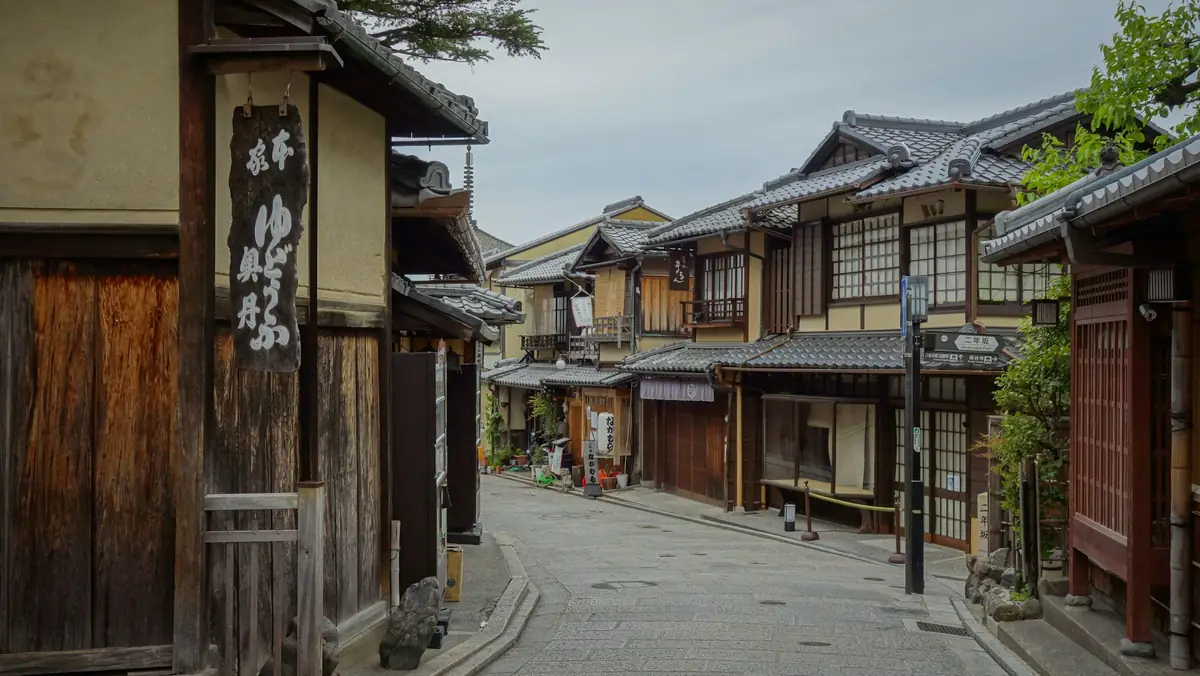
Arashiyama
| Place | Why go | Before you go |
|---|---|---|
| The bamboo grove | A path between towering bamboo stalks filtering the light. | Best early in the morning before the crowds |
| Togetsukyo Bridge | A long wooden bridge over the river framed by hills, loveliest in spring and autumn. | West Kyoto |
| The Sagano Romantic Train | A sightseeing train with open carriages, about 25 minutes along the river between the hills. | March to December; no service in January and February |
| Iwatayama Monkey Park | More than a hundred wild Japanese macaques on a hill overlooking the city. | About a 10-minute walk uphill |
Central Kyoto
| Place | Why go | Before you go |
|---|---|---|
| Nijo Castle | The shogun's castle, with floors that sing as you walk on them, on the World Heritage list. | Central Kyoto |
| Kyoto Imperial Palace | The emperors' old palace in a wide park. | Free with no booking; closed on Mondays; free English tours at 10 am and 2 pm |
| Nishiki Market | A covered street of more than a hundred Japanese food stalls, known as Kyoto's kitchen. | Near Shijo |
| Kyoto Tower | A tower with views over the whole city, opposite Kyoto Station. | Kyoto Station |
Famous temples and shrines
| Place | Why go | Before you go |
|---|---|---|
| The Golden Pavilion (Kinkaku-ji) | A pavilion covered in gold leaf reflected in a calm pond, one of Japan's most famous sights. | ¥500; 9 am to 5 pm |
| Fushimi Inari Shrine | Thousands of orange gates leading up paths on the mountain. | Open all day and free; quietest early in the morning |
| Kiyomizu-dera | A wooden temple with a huge terrace on the hillside overlooking the city, on the World Heritage list. | ¥500 |
| Tōdai-ji, Nara | One of the world's largest wooden buildings, housing a giant bronze Buddha. | Nara, by the deer park |
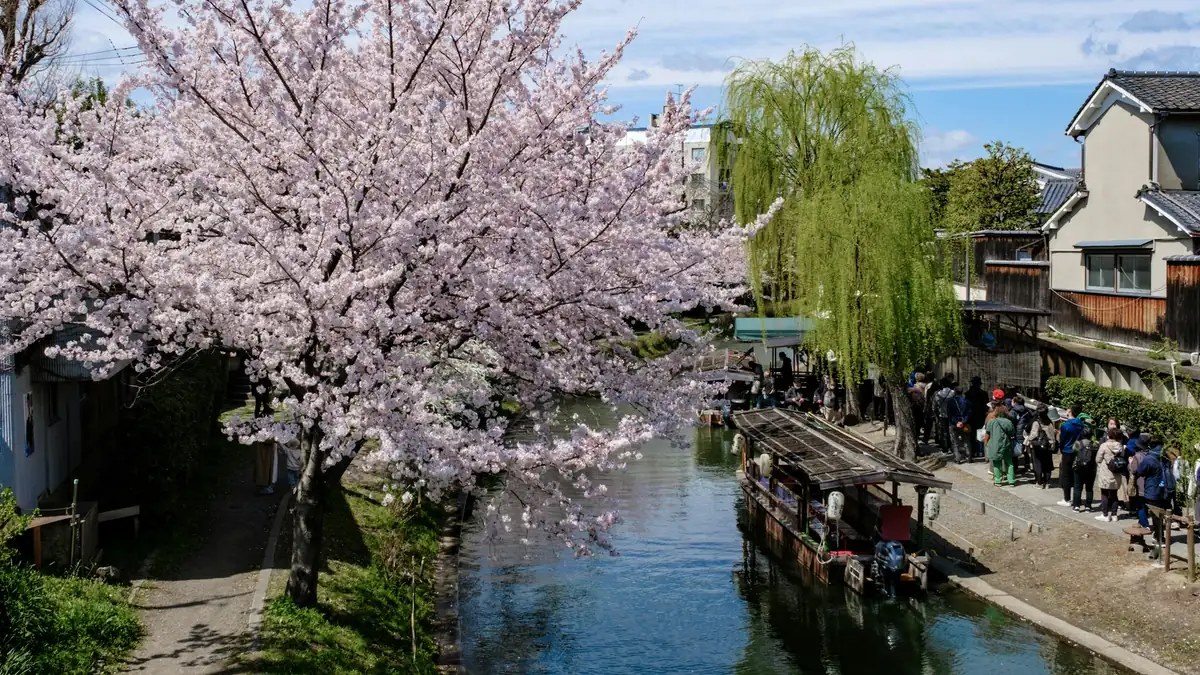
East Kyoto and the cherry blossom
| Place | Why go | Before you go |
|---|---|---|
| Gion | Old wooden lanes and traditional teahouses that keep the spirit of old Kyoto. | East Kyoto |
| Ninenzaka and Sannenzaka | Two sloping stone streets of wooden houses and traditional shops. | Higashiyama |
| The Philosopher's Path | A walk of about two kilometres along a canal shaded by hundreds of cherry trees. | Loveliest in early April |
| The banks of the Kamo River | A riverside walk in the city centre, where people sit at sunset and under the blossom. | Central Kyoto |
A day trip
| Place | Why go | Before you go |
|---|---|---|
| Nara Park | A wide park where deer roam freely and come up to visitors. | Nara, about 45 minutes by train |
Tips before you go
- Kyoto's accommodation tax rose on 1 March 2026: from ¥200 to ¥10,000 per person per night depending on the room rate, paid at the hotel.
- Kyoto is about 15 minutes from Osaka by Shinkansen, and about two and a quarter hours from Tokyo.
- Buses get crowded; walking and trains are easier between districts.
Hotels in Kyoto
Flights to Tokyo
More places nearby
Visa
Frequently asked questions
What are the top things to do in Kyoto?
Fushimi Inari, the Golden Pavilion, Kiyomizu-dera, the bamboo grove in Arashiyama, Nijo Castle, Gion and the Philosopher's Path.
Where can I see cherry blossom in Kyoto?
On the Philosopher's Path, in Arashiyama and along the Kamo River, from late March to early April.
Is the Kyoto Imperial Palace free?
Yes, with no booking; it is closed on Mondays.
How much is Kyoto's accommodation tax?
Since March 2026, from ¥200 to ¥10,000 per person per night depending on the room rate.
Planning your trip to Japan? Read Travel to Japan from Saudi Arabia.
Last updated: October 2026. The information is for guidance only; ticket prices and opening hours are set by each attraction and may change, so check them on the official website before you go.